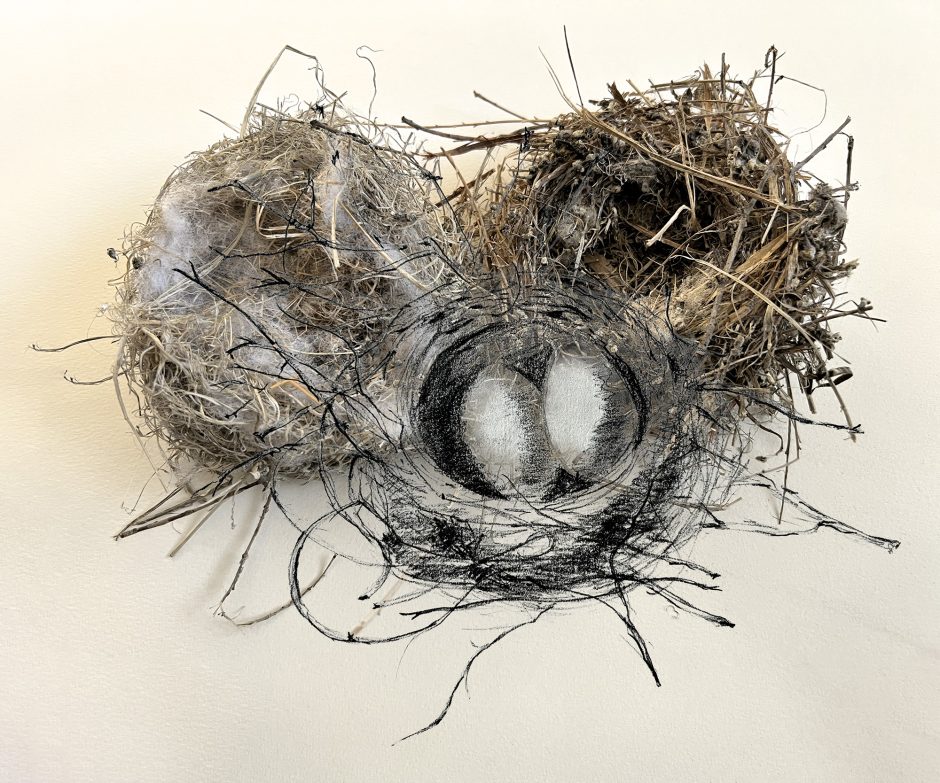
Nests
A 2019 report showed that we have lost 2.99 billion birds or 29% since 1970. The losses continue to accelerate due to warming weather, climate change, society’s focus on economic growth, fertilizer and pesticide use, decline in insect populations, and aggressive agriculture taking over habitats and croplands. Yet the list goes on...
As Peter P. Marra, the ornithologist who headed the 2019 study, wrote:
“The American Dream turns into the American Nightmare as we start to look at what we are doing to biodiversity and the systems we depend on as humans.”
Marshall Johnson, the chief conservation officer at the National Audubon Society states:
“Birds tell us we have a full on emergency across all habitats."
Birds are known as one of the main sources of dispersal of seeds. They do this by accumulating seeds on their feathers and bodies, carrying them in their beaks and claws and excreting them in their droppings.
Bird nests in many cultures throughout history are seen as symbols of sanctuary, refuge and nurturing, as well as metaphors for the creative potential of the natural world and protection for new life. The intricacy and beauty of these ingeniously made structures attests to the power of the natural world.
And symbolically do empty nests represent memory, absence, and loss or transformation and new beginnings?
Amid the global chaos that we currently are facing, these images will perhaps draw attention to the fragility and resilience of birds and their nests. As someone once remarked,”birds teach us that creating something of lasting value requires diligence, patience and the courage to weave together the scraps we find into a sanctuary of hope.”
Courtesy of Richard Levy Gallery